Design, der løfter brugeroplevelsen og letter klimaaftrykket
Ansvaret for internettets klimaaftryk ligger ikke kun hos brugerne. Som UX- og digitale designere kan vi være med til at bekæmpe digitalt spild - ved at designe med lavt CO₂-aftryk og gøre brugeroplevelsen mere effektiv.
Den samlede datamængde
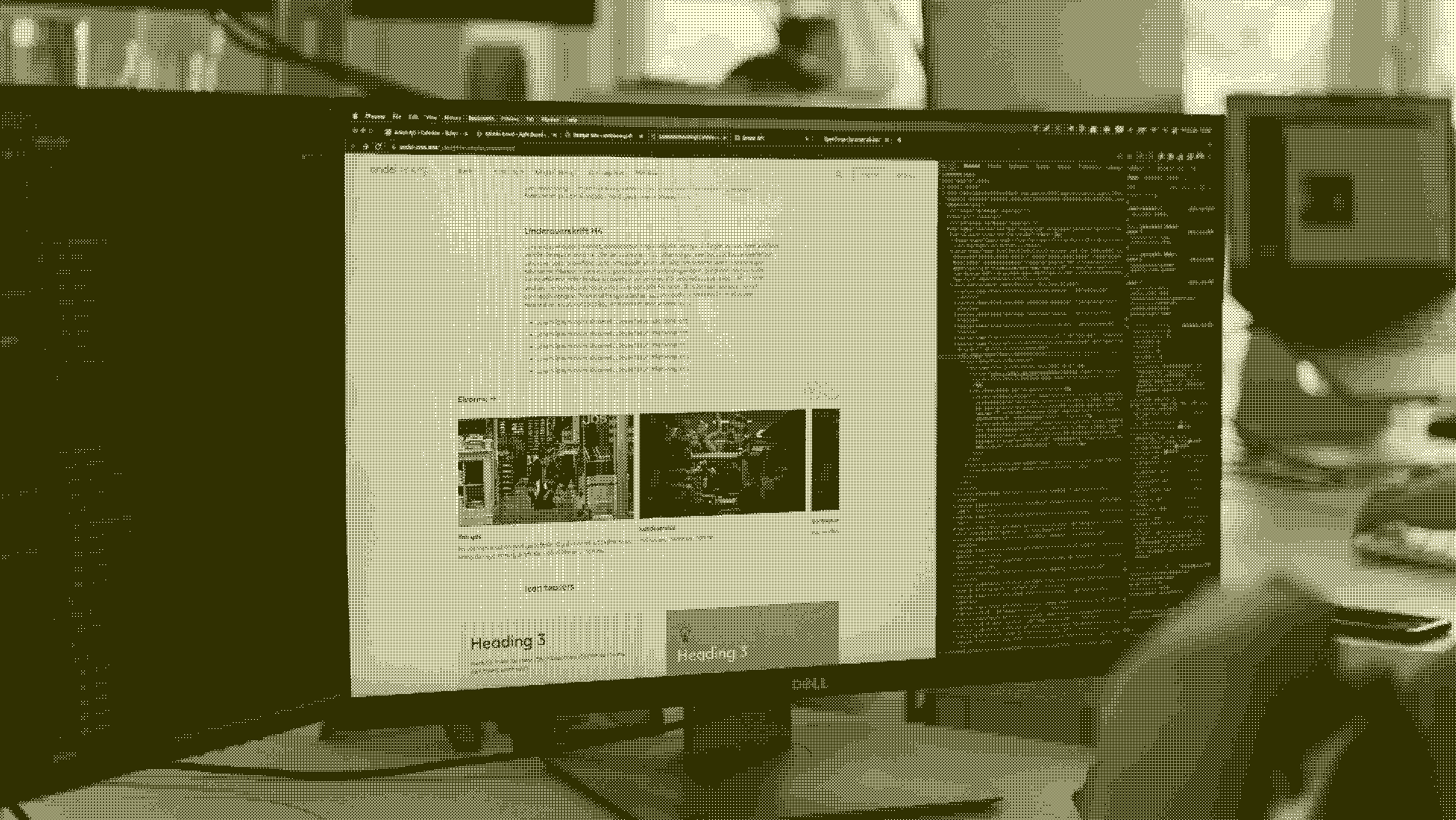
Digitale løsninger - fra websites til apps - består af mange elementer: design, brugeroplevelse, indhold og udvikling. Hvert element bidrager til den samlede datamængde, som i høj grad stammer fra datacentre drevet af fossile brændstoffer. Jo mere datatunge vores digitale løsninger bliver, desto større bliver deres klimaaftryk - i alle led af netværket, fra datalagring til processorkraft på den enkelte enhed.
“The internet is the largest coal-powered machine ever created.”Tom Greenwood, Sustainable Web Design, Book
Lad os slå én ting fast fra start: Vi elsker internettet. Det er trods alt vores levebrød. Men i stedet for at male dommedagsbilleder vender vi hellere samtalen på hovedet og ser på, hvordan vi kan påvirke planeten positivt med konkrete handlinger. Og vi starter der, hvor vi selv står: i designet.
Fra tanke til designhandling
Low-carbon design er, når vi skaber meningsfulde og kreative oplevelser uden et unødigt stort aftryk på planeten. Faktorer som illustrationers vægt, filformater, animationsmetoder og farvevalg kan vise sig at være afgørende detaljer, som en digital designer bør have med i sine overvejelser. I UX handler det især om at møde brugernes behov og samtidig skabe den mest effektive løsning overhovedet - uanset brugerens baggrund eller evner. Lad os dykke lidt dybere ned i de to discipliner.
Low-carbon design
Making conscious and sustainable visual design decisions, means considering when and how to use eco-friendly color palettes, opting for hues that require less energy to display on screens as well as employing media formats that are optimized for lower data usage and quicker loading times, thus decreasing the energy required for consumption and data transmission.
Utilizing what’s possible with low-carbon design can make a bigger difference than you would expect. Here are some areas you as a digital designer may want to consider:
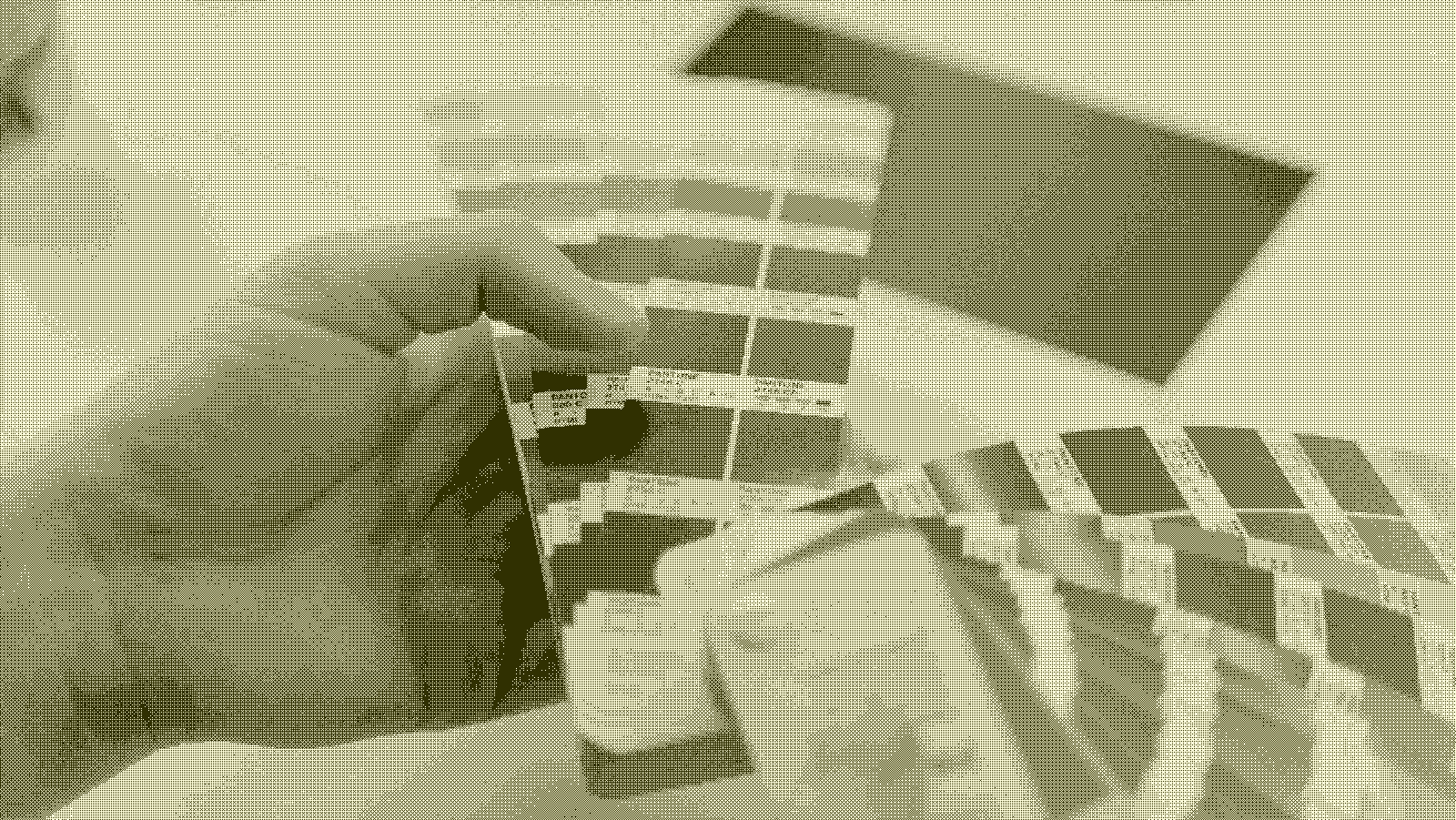
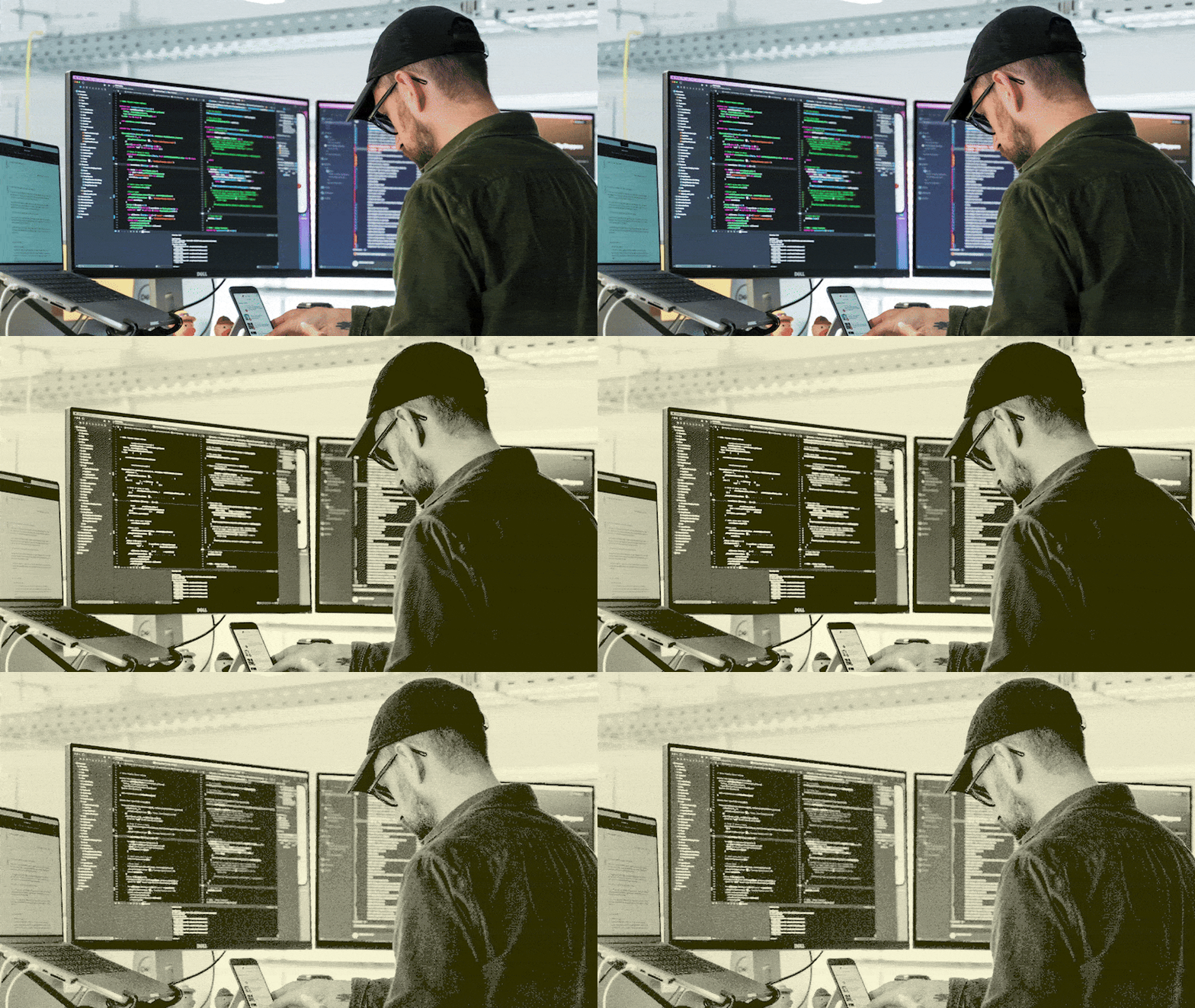
To give you an example, we played around a bit with dithering images. From the original image, we dithered using error diffusion, reducing the file size by 75% and lastly, dithering using Bayer, reducing the file size by 90% of the original. Both with a yellow monochrome color palette.
Efficiency in the user experience
You should know this by now, but we’re an agency obsessed with great user experiences. Designing intuitive products that are simple and easy to use is a core part of our DNA. But how do we design user experiences that have the least friction for users whilst also being climate efficient? Is it possible to optimize the user experience so the user consumes less resources and uses less server processing? We believe so.
People naturally think of the world in terms of objects. We have evolved our understanding of the world through tangible objects, and we expect similar experiences in virtual environments like websites and apps.
For example, if you were to enter a new car dealership, what would you look for when entering? Cars, sales people, the service desk, maybe the coffee machine? You’re going to look for these objects, before you even think about any actions you might take, like: test driving the car you want, how to customize it to your specs, how to complete your purchase of it. Only after you get an idea of the objects available to you, will you decide what to do with those objects.
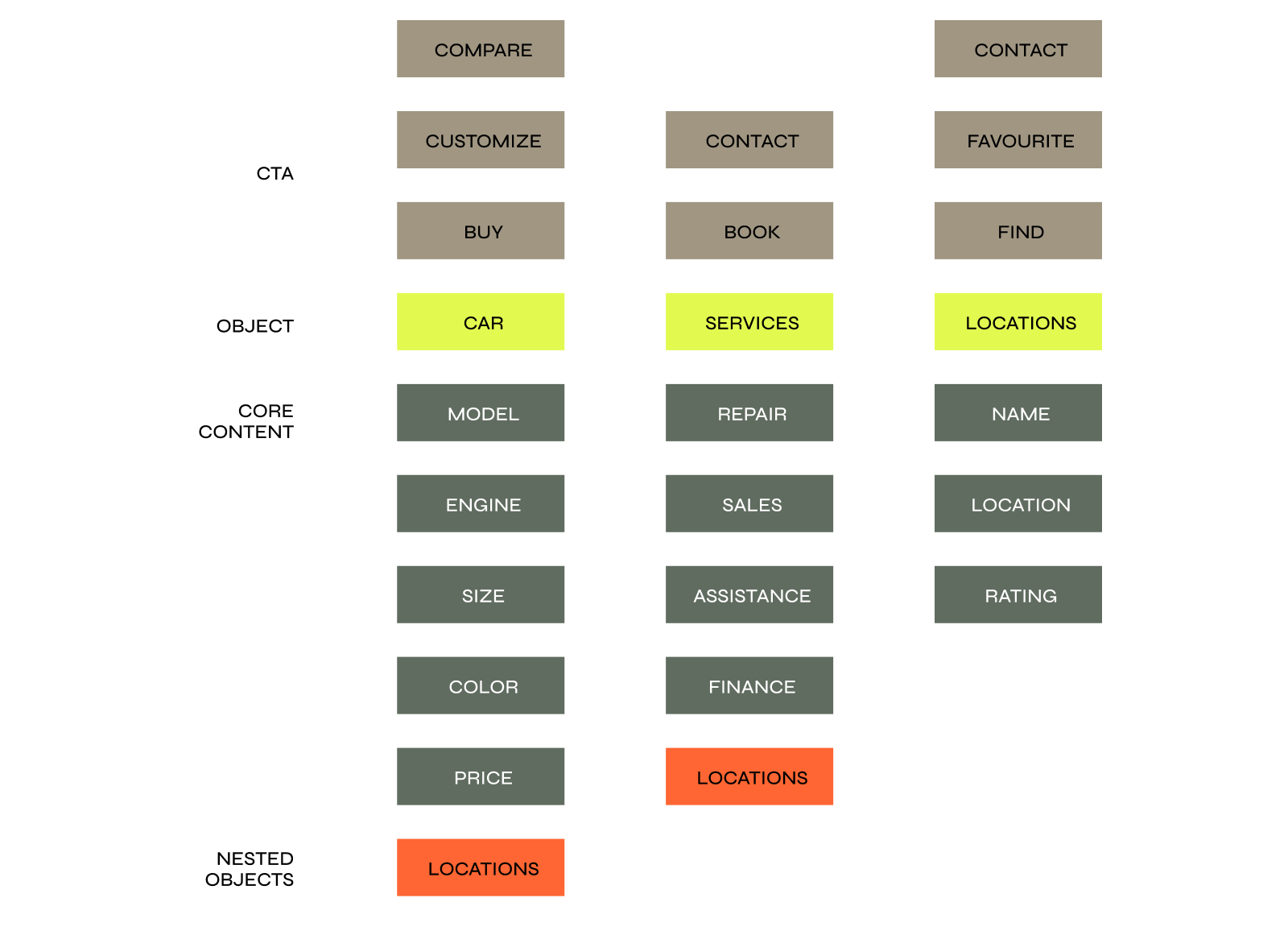
In UX, this thinking is applied to an approach called Object-Oriented User Experience (OOUX). OOUX is a process of planning a digital system modeled on the real-world user interactions. It starts by defining clear and distinct objects to be manipulated by the user, their purpose, and the relationship between them.
With OOUX guidelines we can enhance our design process, so we make sure we reduce complexity in the digital solutions we build, making it easier for users to find what they need. Meaning, the users perform their desired tasks faster without friction thus reducing their carbon footprint using the digital solution.
It can seem complicated, but the process can be broken down into a few digestible steps:
We have created a simple mapping example around three objects on a car dealership’s website to give you an idea.
Additional UX picks
Besides low-carbon design and OOUX, here are some additional considerations you as a UX Designer might consider.
Am I making a difference?
That’s the thing right. As this article shows, it is possible to make a positive impact with low-carbon design as well as creating high-efficiency user experiences. But how do we get tangible evidence that proves we’re making a difference?
Evaluating the carbon footprint from digital products is complex, involving embodied energy, hosting demands, and user interaction across many closed systems. A good place to get started is the sustainable webdesign open standard by Wholegrain Digital and Mightybytes.
Will clients buy into it?
We believe that digital technology holds great potential as a catalyst for sustainable business transformation. And responsible digital products are, undoubtedly, something that’s on the agenda for many existing and potential clients.
At the moment, we are therefore specifically working towards defining clear sustainability offerings that will allow us to counsel on a portfolio of services that have sustainability as offset. Stay tuned on our website for more to come.
Okay, so now what?
Get in touch
Did we spark your interest? Good. We should talk, then.

Cathrine Guiu Tavs
UX Lead
There are plenty of insights to keep you hanging around for a bit. Why don't you?